Kinetic sculpture
Rheoscopic Gear Train
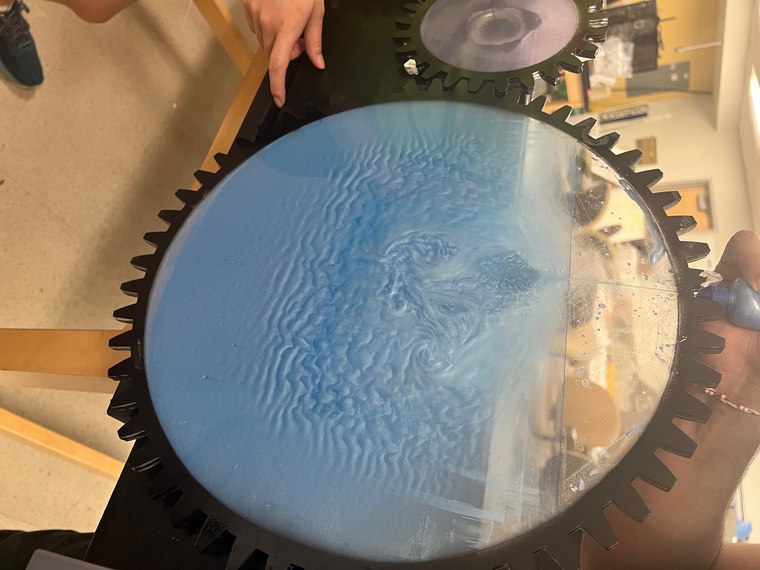
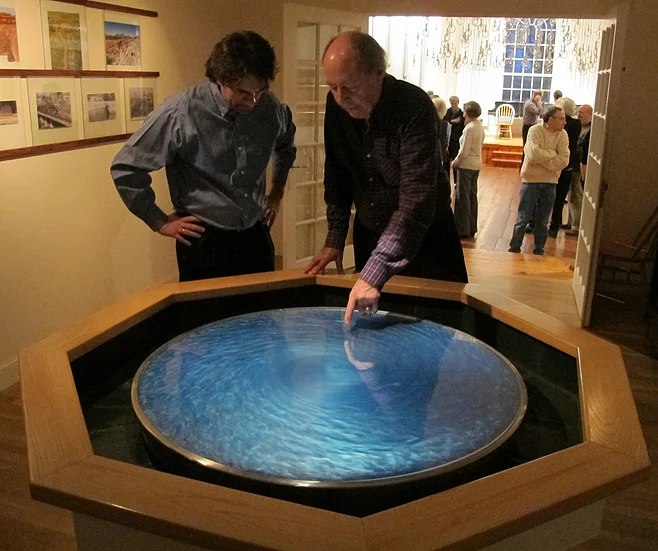
A self-sustaining sculpture: rheoscopic fluid in rotating cylinders, driven by a 3D-printed gear train, after Paul Matisse's Kalliroscope.
Context
Rheoscopic fluid is water with microscopic mica flakes suspended in it. The flakes are flat and reflective and they orient along the flow direction, the way logs do going down a river, so internal currents become visible without introducing any dye or tracer.
The brief was a lasting, self-sustaining piece, after Paul Matisse's Kalliroscope. Rather than photograph a flow once, build something that keeps producing one.
Method
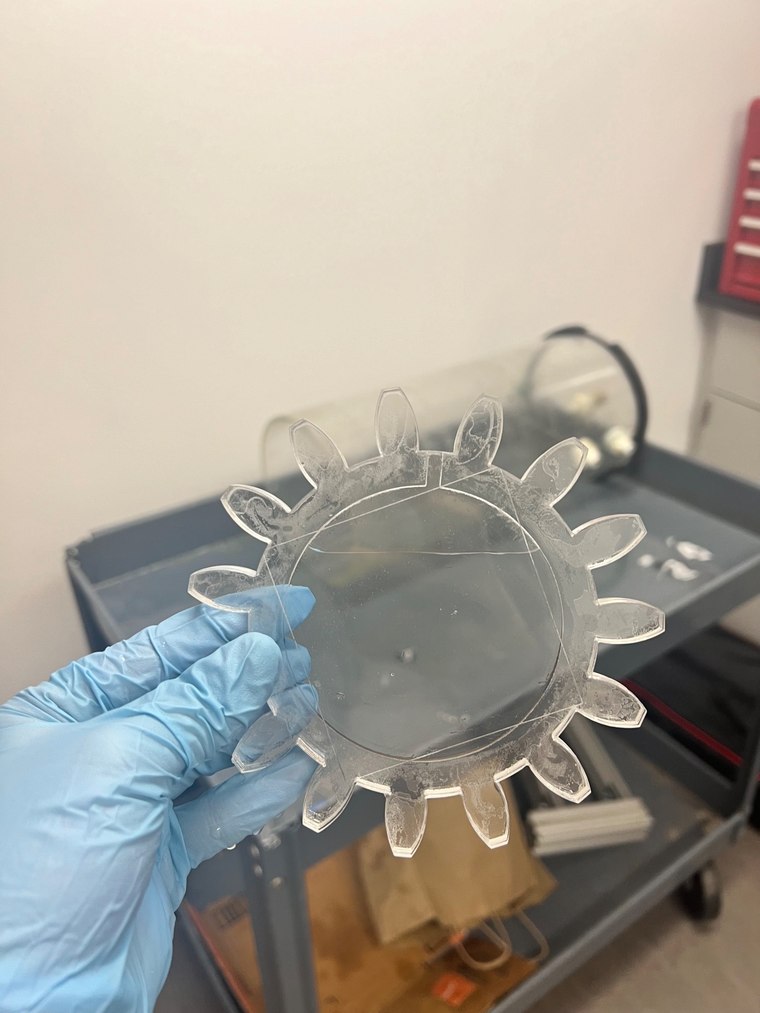
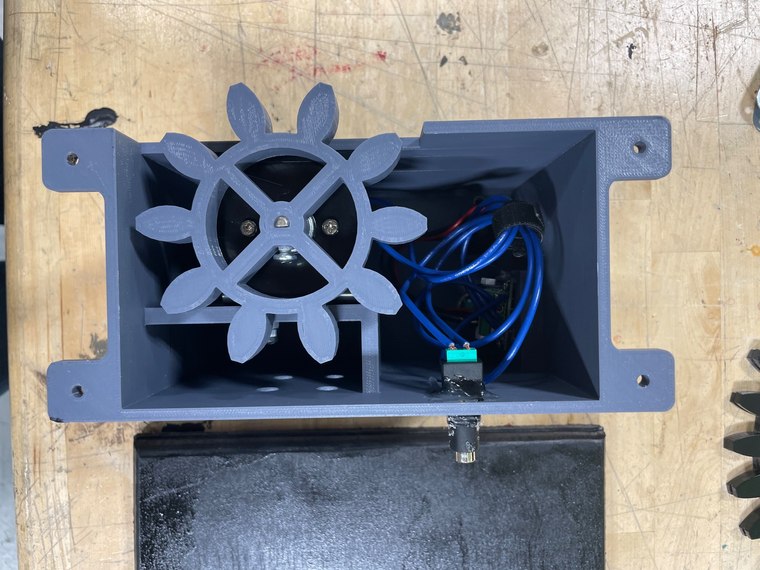
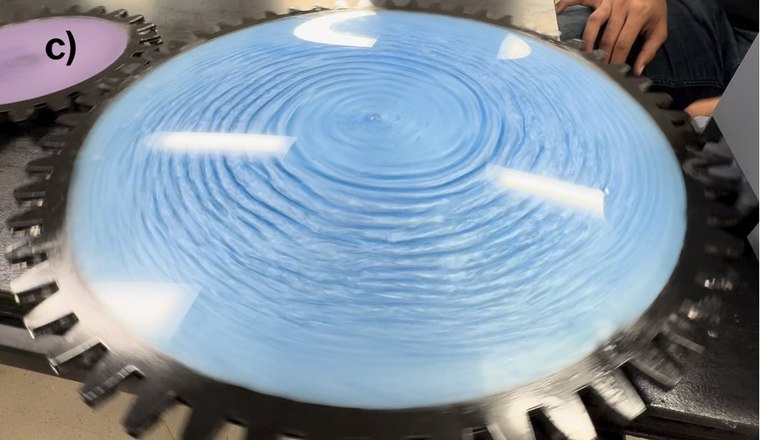
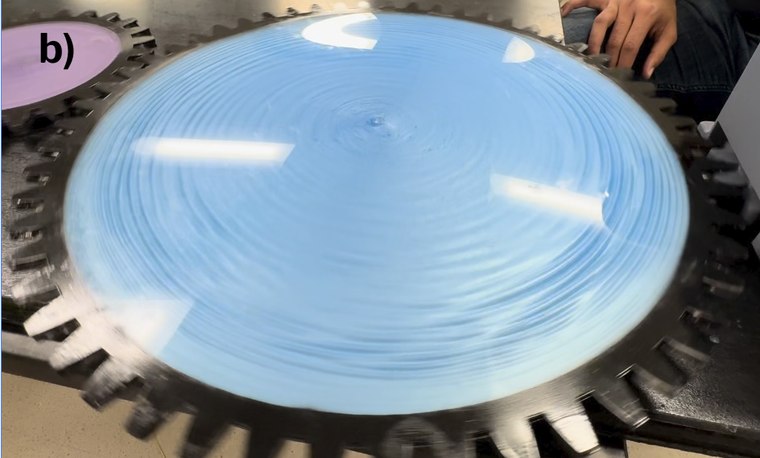
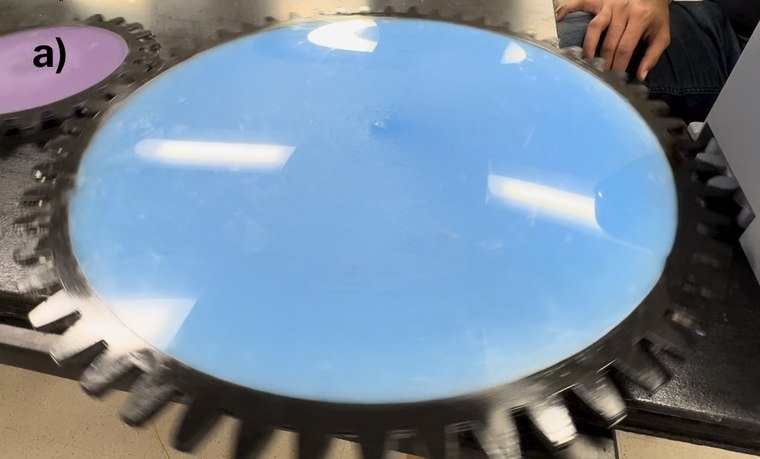
Rheoscopic fluid sealed into rotating cylinders, driven by a 3D-printed gear train. CAD first, then printing, then tuning the gear ratio against the flow it produced, since the rotation rate is what decides whether what you see reads as laminar or as turbulent.
The no-slip boundary condition is the actual subject. Fluid touching the wall moves with the wall, fluid at the centre lags behind, and the shear between the two is what the flakes draw for you. The patterns it settles into look a great deal like the banding in the atmosphere of a gas giant, for the same reason.
Selected results