Kinetic sculpture

Rheoscopic Gear Train

A self-sustaining sculpture: rheoscopic fluid in rotating cylinders, driven by a 3D-printed gear train, after Paul Matisse's Kalliroscope.

CourseENGN 1350: Art Fluid Mechanics, Brown University
TeamSofia Gilroy, Kiara Vong, Himanssh Pettie, Lucian Sharpe
Advised byProf. Roberto Zenit
Kinetic sculpture

Context

Rheoscopic fluid is water with microscopic mica flakes suspended in it. The flakes are flat and reflective and they orient along the flow direction, the way logs do going down a river, so internal currents become visible without introducing any dye or tracer.

The brief was a lasting, self-sustaining piece, after Paul Matisse's Kalliroscope. Rather than photograph a flow once, build something that keeps producing one.

Kinetic sculpture

Method

Rheoscopic fluid sealed into rotating cylinders, driven by a 3D-printed gear train. CAD first, then printing, then tuning the gear ratio against the flow it produced, since the rotation rate is what decides whether what you see reads as laminar or as turbulent.

The no-slip boundary condition is the actual subject. Fluid touching the wall moves with the wall, fluid at the centre lags behind, and the shear between the two is what the flakes draw for you. The patterns it settles into look a great deal like the banding in the atmosphere of a gas giant, for the same reason.

Kinetic sculpture

Selected results

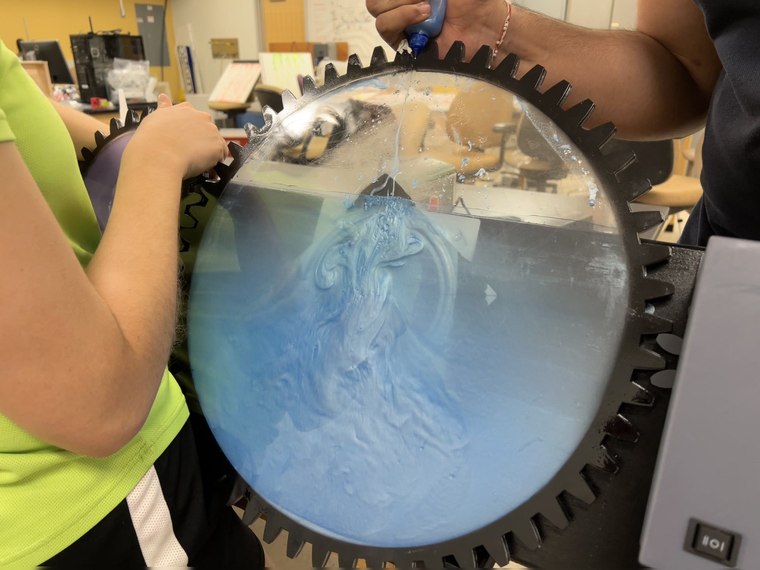
A cylinder in hand
A cylinder in hand · One cylinder out of the train. Rheoscopic fluid is water with microscopic mica flakes that line up with the flow, so the currents show without any dye.
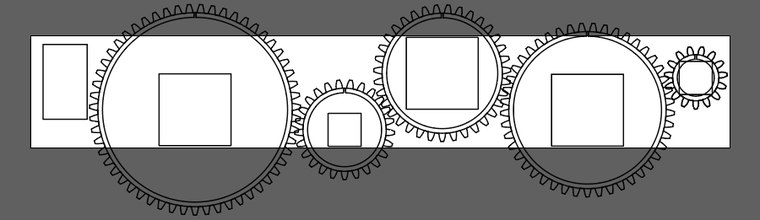
CAD
CAD · The assembly before it was anything physical. Tooth counts were worked backwards from the flow we wanted to see.
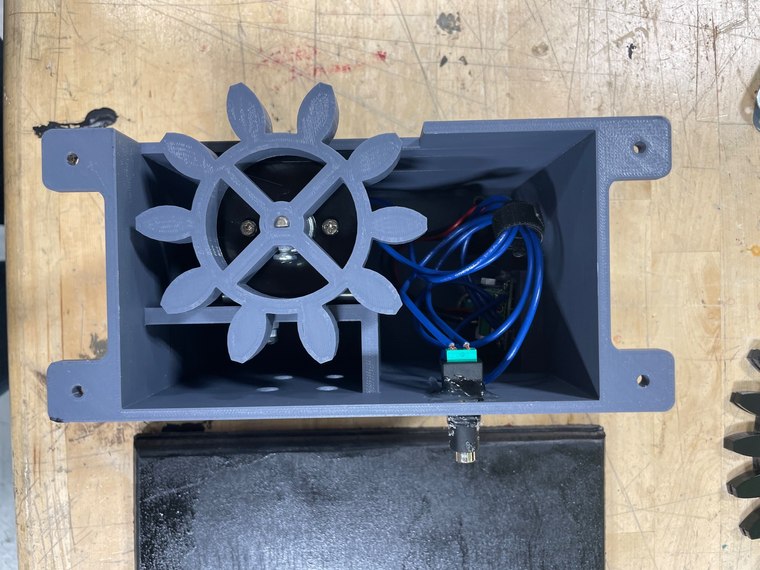
Gear housing
Gear housing · 3D-printed drive, printed in place. The gearing sets the rotation rate, which sets whether the flow reads as laminar or turbulent.
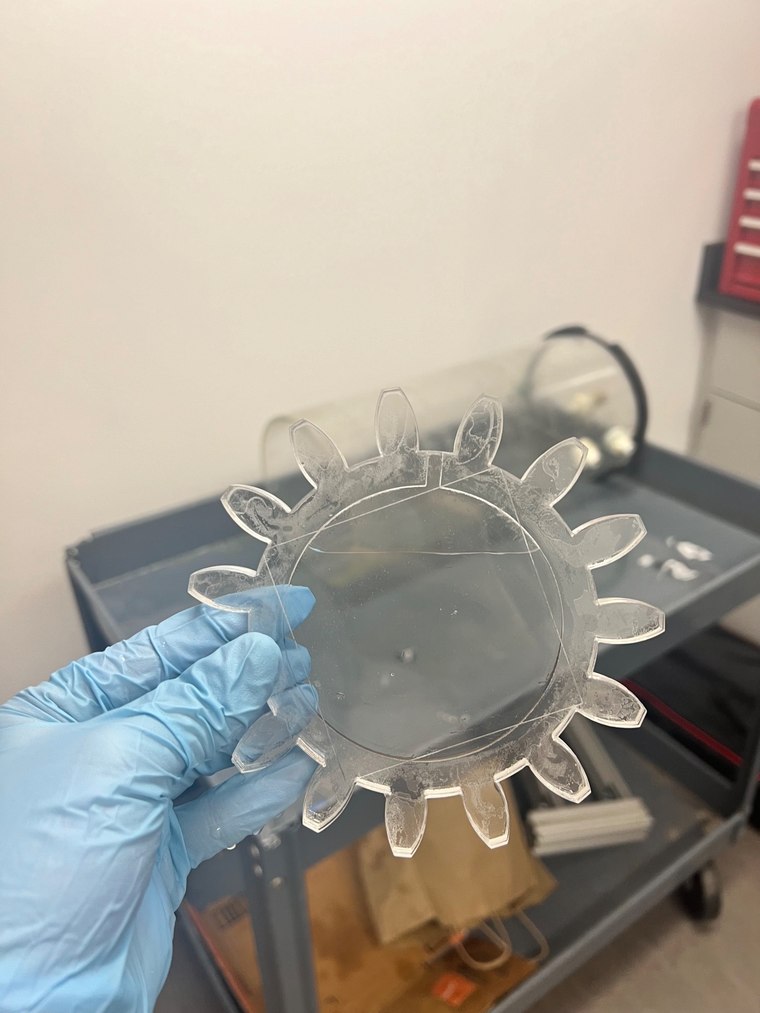
The printed gear
The printed gear · One of the gears before assembly, printed clear so the mesh is easy to check.
Flow study, I
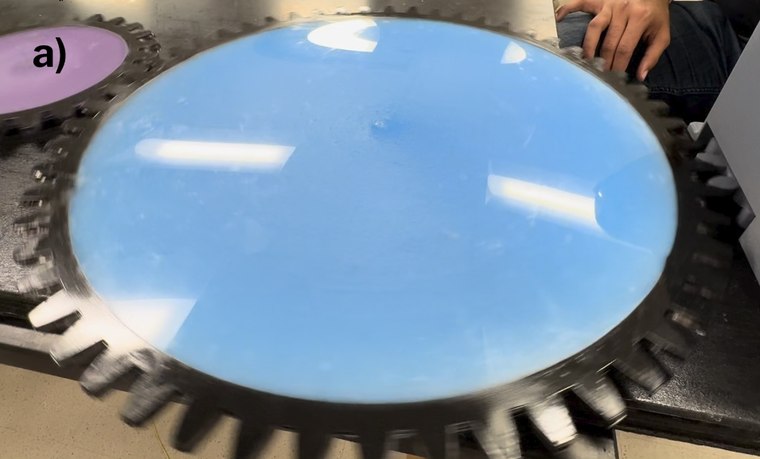
Flow study, I · The slower state. The bands are broad and hold their shape.
Flow study, II
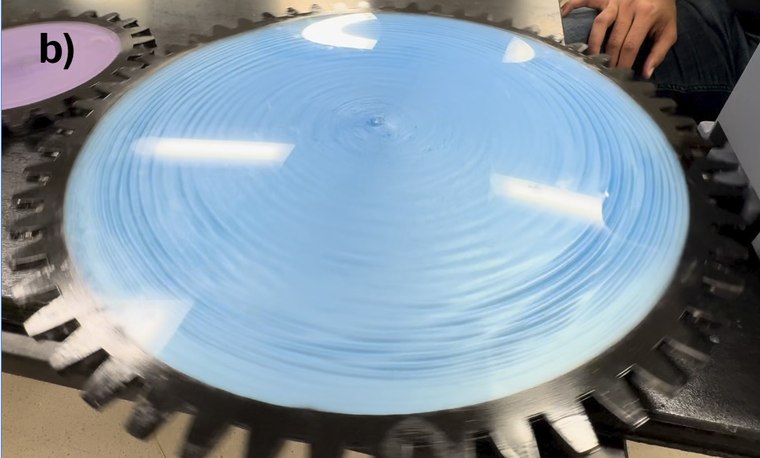
Flow study, II · Faster. The transition toward turbulence is sharp and repeatable.
Moody diagram
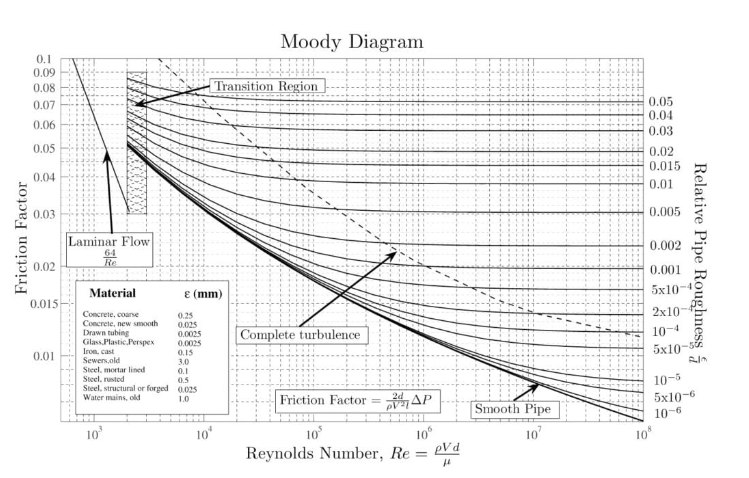
Moody diagram · Where the flow tips from laminar to turbulent against Reynolds number. The rotation rate we chose sits on the laminar side of that line.
Kinetic sculpture

The piece, running

The piece, running · 0:18 · The gear train under its own drive, the printed cylinders turning empty so the mechanism reads clearly. It runs off a single input, the tooth counts setting how fast each cylinder turns against its neighbour.
The fluid running · 0:02 · The same train with the rheoscopic fluid in the cylinders, drawing the flow as they turn. The banding is the no-slip condition made visible: fluid at the wall keeps pace with the wall, fluid at the centre lags, and the shear between them is the pattern. It looks like the bands on a gas giant for the same reason.