Robotics
SandSketch
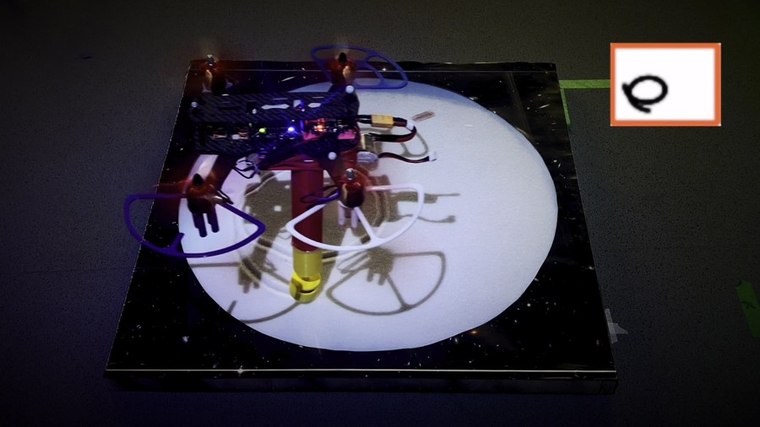
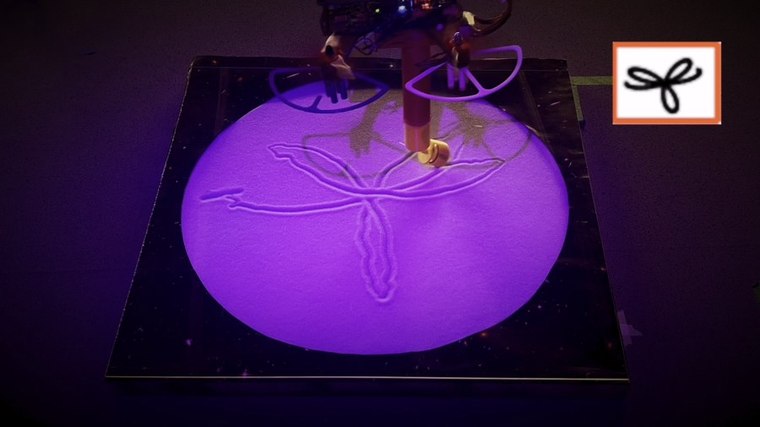
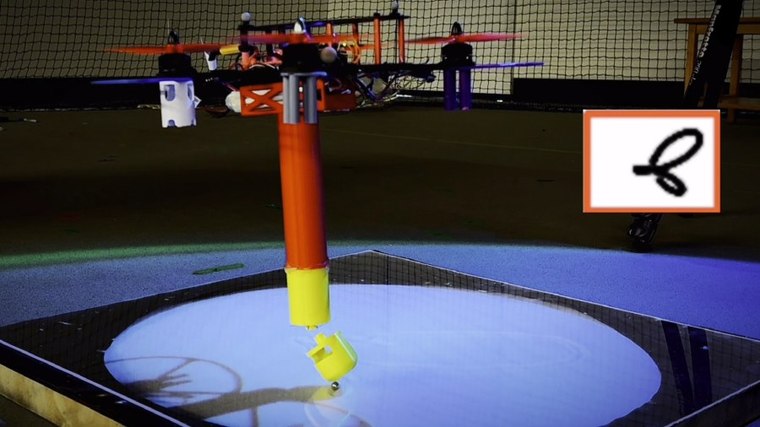
A robo-zen garden: a quadrotor with a pencil attachment, drawing geometric patterns into a sand table from the air.
Context
A robo-zen garden: a quadrotor carrying a pencil attachment, drawing geometric patterns into a table of sand from the air. The piece is impermanent by design, since the next pass erases the last one.
My part of the team was the pattern code: working out trajectories that go beyond parametric curves while still being something a drone can actually fly and the medium can actually hold.
Method
A sand table lit from beneath through tempered glass, a CAD nib attachment, and a guard around it to stop rotor downwash erasing the line as fast as it is drawn. Downwash shaped everything: it sets how long the nib has to be, which sets the payload, which sets the flight time.
The other constraint is that intricate patterns need slow movement, and slow movement costs battery. How complex a pattern can get is therefore a flight-time question rather than a code question, which is not the trade-off any of us expected going in.
Selected results