Personal
Pac-Man
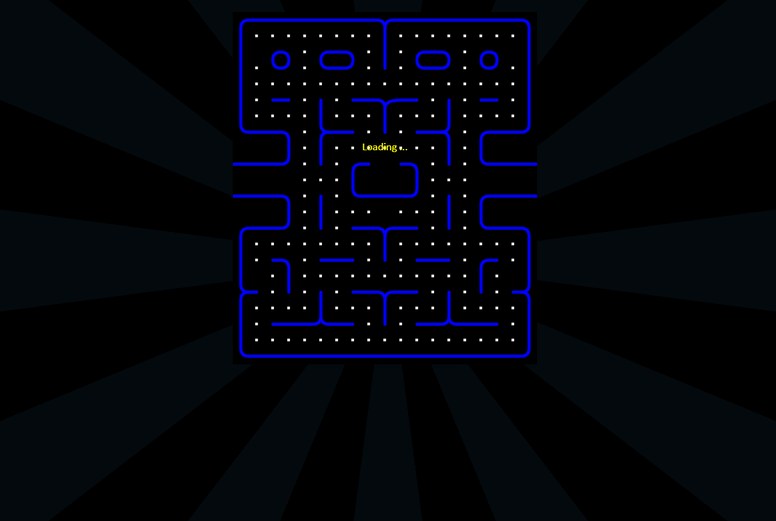
Pac-Man rebuilt in the browser: the maze, the pellets, four ghosts with their own pursuit behaviour, and the frightened state that briefly reverses all of it. Canvas and plain JavaScript, no engine.
The game is the ghosts
Pac-Man is easy to describe and hard to reproduce, and almost all of the difficulty is in four characters who could have been identical and deliberately are not. The maze is a fixed grid, the pellets are a counter, and the player has one input. Everything anybody remembers about the game comes from how the ghosts behave.
So the interesting version of this project was never getting a yellow circle to move. It was giving four pursuers distinct personalities out of one shared movement system.
Four chase rules, one movement system
Each ghost runs the same loop: pick a target tile, then at every junction take the direction that most reduces the distance to it, without reversing. All four share that. What separates them is only which tile they choose, which is a remarkably cheap way to buy character.
Frightened mode then inverts the rule rather than replacing it: the same code picks the direction that INCREASES the distance. The state everyone remembers is four lines, because the movement system was built to be pointed at any target.
Behaviour is cheaper than content
Four ghosts with four target rules produce more variety than four hand-authored patrol routes would have, and they keep producing it after the player has learned them. The system generates the content.
That has come up in interface work more than once. A rule that describes how something should behave outlasts a screen that shows what it should look like, and it survives the case nobody drew.